
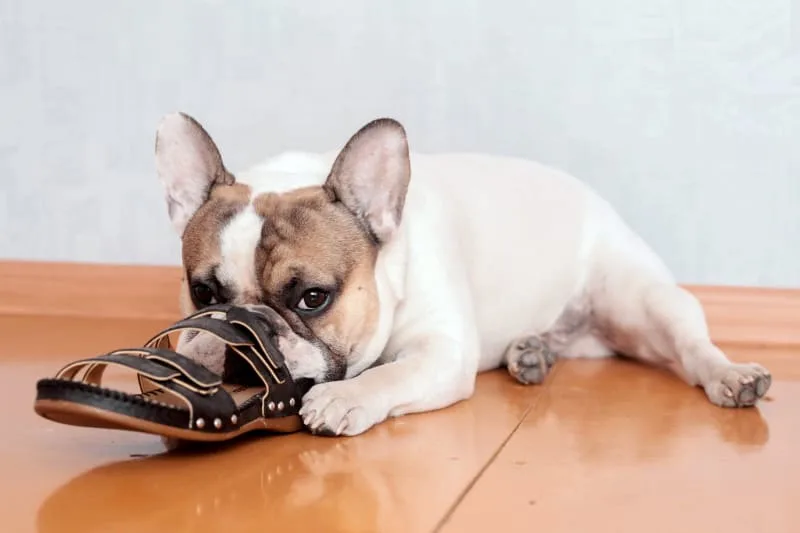
Here, our Westfield vets share ways you can try to stop your dog's chewing problems and help them establish better habits.
The Psychology of Dogs
Like humans, puppies use their mouths to explore their new environment. This could make them eat almost everything in sight, from stinky old shoes and paper to furniture, toxic plants, electrical cords ...and even your brand new designer purse.
You may be surprised to find out that dogs don’t chew to spite us, but they love scents that remind them of their owners, this makes your shoes and sports equipment a tempting target. They also live in the moment, so won’t connect their destruction with your anger and any subsequent discipline.
Why Your Dog Chews
Believe it or not, your dog doesn’t chew to spite you. There are many reasons this behavior may persist, including:
How to Stop a Dog from Chewing
Since dogs don’t know the differences between right and wrong or can't connect your anger to their actions (like chewing up your sofa), they won’t understand or change their behavior after being disciplined. So don’t spank, scold, or muzzle them. Instead, try these:
Exercise and stimulation
A tired pup is a happy one. Learn what your dog's energy levels and needs are, and customize exercise routines and playtimes to match. Use 20 to 30 minutes of daily aerobic exercise as a benchmark, unless they have a medical problem that prevents this.
Training and supervision
Puppies have to learn good habits and what they can and can't do, so it's key to supervise them closely at home.
Keep valuables tucked away
“Dog-proof” your home. Got some new Valentino pumps or golf shoes you’d rather keep free of your dog’s chompers? Put them in a place they can’t reach.
Do not reward the behavior you don’t want to continue
When your puppy nips your fingers, shriek, pull back and leave the room. When your dog snatches a valuable item and runs off, quell the urge to chase them. Instead, call them to you and offer a treat or toy in exchange for the item being chewed.
Ways Your Vet Can Help
Thankfully, excessive chewing behaviors in dogs usually dwindles by approximately 18 months of age, however, will likely continue to some level, based on your dog’s breed and other factors, for their entire life. If your pup is excessively chewing, contact your veterinarian. They can:
Suggest appropriate chew toys, treats, deterrents, or training methods
Check for medical reasons your dog might be chewing and provide treatment
Provide advice and pointers for modifying your dog’s behavior
Advise whether you should let certain items pass, when your dog needs to come in for an exam and when you should induce vomiting if he or she has chewed an inappropriate item
At Westfield Animal Hospital we can implement a comprehensive physical checkup and offer you advice on how you can resolve this frustrating problem.
Contact our Westfield vets today for help getting your dog's chewing problem under control and to schedule an appointment.
